

Car Features
The first globally-adopted IFS
Dubonnet suspension was a system of independent front suspension and steering, invented by André Dubonnet in 1929. It was initially exhibited in 1932, trialled by Enzo Ferrari on an Alfa Romeo P3 racing car and was then adopted by several makers, including General Motors, who fitted it to many of its American and European models.
 Andre Dubonnet in 1933 – Bibliotheque nationale de France
André Dubonnet was a very interesting person. Born in 1897, André was the grandson of Joseph Dubonnet, founder of the Dubonnet apéritif firm, from whom he inherited substantial wealth.
He began his WWI service as an artilleryman, but switched to aviation and was credited with six aerial victories.
During the 1920s, Dubonnet represented France in Olympic bob-sleds, as well as racing Bugatti and Hispano-Suiza cars. Two of the Hispano-Suizas he commissioned have subsequently won awards at the famous Pebble Beach Concours: a 1924 ‘tulipwood’ HC6 torpedo and a 1938 Hispano-Suiza H6B, dubbed ‘ Xenia’ after his second wife.

However, André Dubonnet was no idle playboy: rather, he spent much of his fortune on inventions and aerodynamic studies. The most notable invention was his independent suspension system (système Dubonnet) that may have incorporated inputs from Gustave Chedru and the licence for which he sold to GM’s Alfred P Sloan, as well as to some European car makers.
 Dubonnet-1936 Dubonnet Dolphin – Curbside Classic
Another initiative was André’s streamlined Dubonnet Dolphin that was launched in 1936, employing a mid-engined Ford V8 and a backbone chassis. Ford bought the prototype and shipped it to the USA, where it subsequently disappeared.
Dubonnet became a Chevalier of the Légion d’honneur in January 1936.
Système Dubonnet
André’s original patent – applied for in 1929 and granted in 1933 – depicted his suspension units mounted at the four corners of a tapered perimiter-frame chassis. The tapered front of the frame allowed the wheels to operate in steering arcs.
The suspension units were configured as leading-arm at the front and trailing-arm at the rear. Each suspension unit consisted of three joined sections, in each of which were four coil springs and a central four-vane actuator that was attached to each leading or trialing arm. The rotary action of the ‘vanes’ was converted to linear spring and damping actions. There were three spring modules in each suspension unit, for a total of 12 coils.
 Andre Dubonnet’s 1932 H6B suspension prototype – The Old Motor
André’s first installation of his suspension design was on an Hispano Suiza H6B that was displayed at the 1932 Paris Motor Show, but it differed from the 1929 patent drawing in that the front suspension had trailing-arm configuration and the independent rear, leading-arm.
By the time André’s suspension was mounted to the front of Scuderia Ferrari’s P3 racing car, each suspension unit had been simplified to incorporate a single coil spring and single, external friction damper.
 Alfa Romeo P3 Tipo B Scuderia Ferrari – Ed Callow
As per André’s patent, the front axle beam was bolted to the chassis dumb irons, effectively becoming a chassis cross member and the suspension units pivoted on king pins at the ends of the axle. As set up on the P3 the front suspension was single leading arm, with the housing oil-filled, to lubricate spring and leading arm actions.

The 1932 Paris Motor Show car’s all-independent suspension caused a sensation and a rapid take-up by General Motors. GM’s engineers had been looking for ways to improve the ride quality of sedans, without compromising handling too much.
They already knew that if the front wheels were isolated from each other they could have high spring rates, for stability, but with greatly improved ride quality over that provided by leaf springs on a beam axle.
In 1933, GM evaluated two IFS designs: the Dubonnet style and an SLA (short-long-arm) design that was more like the double-wishbone suspensions of today, other than for the upper control arm doubling as a lever-action shock absorber.
 1951 Buick front wheel suspension – Hometown Buick
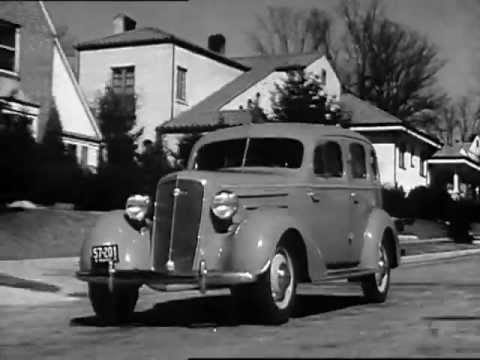
For GM’s 1934 production cars, the Buick, Oldsmobile and Cadillac GM divisions opted to go with the SLA, while the Dubonnet was selected by Chevrolet president William S Knudsen for the higher-volume Chevrolet and Pontiac models.
The original Dubonnet design was complex, with three spring modules per corner and a total of 12 springs, so GM’s engineers built on the simplified design used on the Alfa Romeo P3.

Their design also had a single cylinder, but it contained two concentric coil springs and lever-actuated bump and rebound dampers. The components were housed in an oil-filled unit that pivoted on the king pin and connected to the front hub by a trailing arm and a radius rod.

Although the Dubonnet-GM trailing-arm design behaved somewhat like a human knee, the SLA didn’t, but GM decided to group both designs under the one marketing umbrella of ‘Knee Action’.

GM’s European brands, Opel and Vauxhall, also adopted the Dubonnet design, as did Fiat, Alfa Romeo and Simca.
In service, the Dubonnet system proved to be maintenance-critical, with a propensity to leak oil and wreck needle bearings.
 Dubonnet suspended Vauxhall DX14 front axle 1937
Regular upgrades were done, but in 1937, Pontiac switched from the Dubonnet design to SLA IFS and Chevrolet followed in 1939. However, the term ‘Knee Action’ was used on post-War GM cars that were initially just updated 1930s models. The ‘Knee Action’ moniker continued until 1954.
 Hispano Suiza H6C Xenia – Brian Snelson
André Dubonnet’s now famous 1938 Hispano Suiza Xenia retained the original three-spring-chamber suspension design, front and rear.
 Xenia front suspension unit
Like the post-War Yanks, European car makers also adopted variations on the SLA and other IFS designs for their 1950s and subsequent models. The 1953-55 Iso Isettas and 1957-59 BMW 600 and 700 mini-cars were the last known vehicles fitted with Dubonnet suspensions.
ADVERTISEMENTS

